Encyclopedia Cascadia is an online encyclopædia and digital resource library that makes the place names, toponyms, geographic features and literature of the Pacific Northwest Coast discoverable in the digital age.
A Place Name Database for the Pacific Northwest
The Encyclopedia Cascadia place name database contains official and unofficial place names for all of British Columbia, Idaho, Oregon, and Washington State.
The U.S. Board on Geographic Names (BGN) provided all official place names for Idaho, Oregon, and Washington State localities.
The BC Geographical Names Office (BCGNO) provided all official place names for the Province of British Columbia on this site. Additionally, resources from StatsCan for Standard Geographical Classification reference materials have been incorporated to provide a uniformity to place name data across countries.
Latest Place Name Updates
Resources recently updated and where information has been added or removed from the enclopedia
City of Kirkland, Washington
Tillamook County, Oregon
Tillamook County was formed in 1853 from Yamhill and Clatsop Counties. The name "Tillamook" is a Chinook language term meaning "people of [the village] Nekelim (or Nehalem)"
Tillamook County was formed in 1853 from Yamhill and Clatsop Counties. The name "Tillamook" is a Chinook language term meaning "people of [the village] Nekelim (or Nehalem)"
qathet Regional District, British Columbia
In June 2017, Tla’amin Nation elders gifted the word “qathet” to the regional district. Pronounced “KA-thet,” it means “working together.” qathet Regional District is located on the west coast of British Columbia, about 175 km north of Vancouver, within the traditional territory of the Tla’amin, shíshálh, Klahoose, Nanoose, Homalco, and K’ómoks First Nations. qathet Regional District’s jurisdiction includes approximately 5,000 square kilometers of land encompassing the mainland that runs north beyond Toba Inlet and south to sḵelhp (Saltery Bay) as well as Texada, Savary, and Lasqueti islands.
In June 2017, Tla’amin Nation elders gifted the word “qathet” to the regional district. Pronounced “KA-thet,” it means “working together.” qathet Regional District is located on the west coast of British Columbia, about 175 km north of Vancouver, within the traditional territory of the Tla’amin, shíshálh, Klahoose, Nanoose, Homalco, and K’ómoks First Nations. qathet Regional District’s jurisdiction includes approximately 5,000 square kilometers of land encompassing the mainland that runs north beyond Toba Inlet and south to sḵelhp (Saltery Bay) as well as Texada, Savary, and Lasqueti islands.
Houghton, Washington
Houghton incorporated in 1948. By the 1960's, the interests of Houghton and Kirkland began to converge. In 1968, the citizens of Houghton elected to join Kirkland to become one city with a population of 13,500.
Houghton incorporated in 1948. By the 1960's, the interests of Houghton and Kirkland began to converge. In 1968, the citizens of Houghton elected to join Kirkland to become one city with a population of 13,500.
Franklin County, Washington
Franklin County was formed out of Whitman County on November 28, 1883 and is named for Benjamin Franklin.
Franklin County was formed out of Whitman County on November 28, 1883 and is named for Benjamin Franklin.
Grays Harbor County, Washington
Greys Harbor County, originally named Chehalis County, was formed out of Thurston County on April 14, 1854. Its name was subsequently changed to Grays Harbor County by the Washington legislature, effective June 9, 1915. The name change helped eliminate confusion resulting from the fact that the city named Chehalis was in Lewis County.
Greys Harbor County, originally named Chehalis County, was formed out of Thurston County on April 14, 1854. Its name was subsequently changed to Grays Harbor County by the Washington legislature, effective June 9, 1915. The name change helped eliminate confusion resulting from the fact that the city named Chehalis was in Lewis County.
Island County, Washington
Its name reflects the fact that it is composed entirely of islands. It contains two large islands, Whidbey and Camano, and seven smaller islands (Baby, Ben Ure, Deception, Kalamut, Minor, Smith, and Strawberry). Island County was created out of Thurston County on December 22, 1852, by the legislature of Oregon Territory, and is the eighth-oldest county in Washington. It originally encompassed what are now Snohomish, Skagit, Whatcom, and San Juan Counties.
Its name reflects the fact that it is composed entirely of islands. It contains two large islands, Whidbey and Camano, and seven smaller islands (Baby, Ben Ure, Deception, Kalamut, Minor, Smith, and Strawberry). Island County was created out of Thurston County on December 22, 1852, by the legislature of Oregon Territory, and is the eighth-oldest county in Washington. It originally encompassed what are now Snohomish, Skagit, Whatcom, and San Juan Counties.
Jefferson County, Washington
Jefferson County was formed out of Thurston County on December 22, 1852, by the legislature of Oregon Territory, and included the northern 4,854 square miles (12,571.8 km2) portion of the Olympic Peninsula. On April 26, 1854, the legislature of Washington Territory created Clallam County from the northwestern 2,670 square miles (6,915.3 km2) portion of this original area.
Quillehuyte County was split from Jefferson and Clallam counties in 1868 and returned to those counties a year later.
Jefferson County was formed out of Thurston County on December 22, 1852, by the legislature of Oregon Territory, and included the northern 4,854 square miles (12,571.8 km2) portion of the Olympic Peninsula. On April 26, 1854, the legislature of Washington Territory created Clallam County from the northwestern 2,670 square miles (6,915.3 km2) portion of this original area. Quillehuyte County was split from Jefferson and Clallam counties in 1868 and returned to those counties a year later.
King County, Washington
King County was originally named after William Rufus King who was Vice-President when the Washington Territory was created. In 1986, a motion was introduced to change the namesake to Martin Luther King, Jr. On February 24, 1986, the King County Council passed Council Motion 6461 five votes to four setting forth the historical basis for the renaming of King County in honor of Martin Luther King, Jr. Because only the state can charter counties, this change was not made official until April 19, 2005, when the Governor signed Senate Bill 5332 into law.
King County was originally named after William Rufus King who was Vice-President when the Washington Territory was created. In 1986, a motion was introduced to change the namesake to Martin Luther King, Jr. On February 24, 1986, the King County Council passed Council Motion 6461 five votes to four setting forth the historical basis for the renaming of King County in honor of Martin Luther King, Jr. Because only the state can charter counties, this change was not made official until April 19, 2005, when the Governor signed Senate Bill 5332 into law.
Kitsap County, Washington
Kitsap County was formed out of King County, Washington, and Jefferson County, Washington on January 16, 1857 and is named for Chief Kitsap of the Suquamish Tribe. Originally named Slaughter County, it was soon renamed.
Kitsap County was formed out of King County, Washington, and Jefferson County, Washington on January 16, 1857 and is named for Chief Kitsap of the Suquamish Tribe. Originally named Slaughter County, it was soon renamed.
Mason County, Washington
Mason County was formed out of King County on March 13, 1854. Originally named Sawamish County, it took its present name in 1864 in honor of Charles H. Mason, the first Secretary of Washington Territory
Mason County was formed out of King County on March 13, 1854. Originally named Sawamish County, it took its present name in 1864 in honor of Charles H. Mason, the first Secretary of Washington Territory
Pacific County, Washington
The county was formed by the government of Oregon Territory on February 4, 1851 and is named for the Pacific Ocean. The unincorporated community of Oysterville, established in 1852, was the original county seat until the late 19th century when it changed to South Bend. Pacific County is centered on the Willapa Bay, a region that provides twenty-five percent of the United States oyster harvest.
The county was formed by the government of Oregon Territory on February 4, 1851 and is named for the Pacific Ocean. The unincorporated community of Oysterville, established in 1852, was the original county seat until the late 19th century when it changed to South Bend. Pacific County is centered on the Willapa Bay, a region that provides twenty-five percent of the United States oyster harvest.
Pierce County, Washington
Formed out of Thurston County on December 22, 1852, by the legislature of Oregon Territory, it was named for U.S. President Franklin Pierce.
Formed out of Thurston County on December 22, 1852, by the legislature of Oregon Territory, it was named for U.S. President Franklin Pierce.
San Juan County, Washington
The county was formed on October 31, 1873 from Whatcom County and is named for the San Juan Islands, which are in turn named for Juan Vicente de Güemes, 2nd Count of Revillagigedo, the Viceroy of New Spain. It is the only county in Washington not to have state highways.
The county was formed on October 31, 1873 from Whatcom County and is named for the San Juan Islands, which are in turn named for Juan Vicente de Güemes, 2nd Count of Revillagigedo, the Viceroy of New Spain. It is the only county in Washington not to have state highways.
Skagit County, Washington
The county was formed in 1883 from Whatcom County and is named for the Skagit Indian tribe, which has been indigenous to the area prior to European-American settlement.
The county was formed in 1883 from Whatcom County and is named for the Skagit Indian tribe, which has been indigenous to the area prior to European-American settlement.
City of Juliaetta, Idaho
City of Boise, Idaho
City of Genesee, Idaho
City of Duvall, Washington
City of Westport, Washington
Helmer, Idaho
West Side, Oregon
Silver Lake, Oregon
Quinault, Washington
Tulalip, Washington
Web Resources Related to Entries
Curated resources recently added to the enclopedia
British Columbia Regional Digitized History (BCRDH)
The University of British Columbia's Okanagan Campus Library has cultivated regional partnerships with community memory institutions across B.C.'s southern interior and enhanced access to archival records and primary sources through the British Columbia Regional Digitized History (BCRDH) project. The project's primary purpose has been to connect UBCO Library's Special Collections and Archives program to community repositories in the pursuit of creating a shared digital portal compiling a wide range of local historical resources including photographs, oral histories, video, maps, and newspapers.
WEB LINK
The University of British Columbia's Okanagan Campus Library has cultivated regional partnerships with community memory institutions across B.C.'s southern interior and enhanced access to archival records and primary sources through the British Columbia Regional Digitized History (BCRDH) project. The project's primary purpose has been to connect UBCO Library's Special Collections and Archives program to community repositories in the pursuit of creating a shared digital portal compiling a wide range of local historical resources including photographs, oral histories, video, maps, and newspapers.
WEB LINK
Kirkland Heritage Society
The Kirkland Heritage Society’s mission is to identify historic resources; to encourage their preservation; to collect, preserve, exhibit and interpret the history and heritage of Kirkland and its people; and to promote public involvement in and appreciation of its heritage and cultures.
WEB LINK
The Kirkland Heritage Society’s mission is to identify historic resources; to encourage their preservation; to collect, preserve, exhibit and interpret the history and heritage of Kirkland and its people; and to promote public involvement in and appreciation of its heritage and cultures.
WEB LINK
West Vancouver Archives and Collections
The West Vancouver Archives collects, preserves, and provides meaningful access to the records that tell the story of West Vancouver.
WEB LINK
The West Vancouver Archives collects, preserves, and provides meaningful access to the records that tell the story of West Vancouver.
WEB LINK
360 Riot Walk - Vancouver, British Columbia
360 Riot Walk is an interactive walking tour of the 1907 Anti-Asian Riots in Vancouver, the ancestral territory of the Musqueam, Squamish and Tseil-Waututh people. It utilizes 360 video technology to trace the history and route of the mob that attacked the Chinese Canadian and Japanese Canadian communities following the demonstration and parade organized by the Asiatic Exclusion League in Vancouver. Participants are brought into the social and political environment of the time where racialized communities were targeted through legislated as well as physical acts of exclusion and violence. The soundtrack is available in four languages of the local residents of the period: English, Cantonese, Japanese and Punjabi.
WEB LINK
360 Riot Walk is an interactive walking tour of the 1907 Anti-Asian Riots in Vancouver, the ancestral territory of the Musqueam, Squamish and Tseil-Waututh people. It utilizes 360 video technology to trace the history and route of the mob that attacked the Chinese Canadian and Japanese Canadian communities following the demonstration and parade organized by the Asiatic Exclusion League in Vancouver. Participants are brought into the social and political environment of the time where racialized communities were targeted through legislated as well as physical acts of exclusion and violence. The soundtrack is available in four languages of the local residents of the period: English, Cantonese, Japanese and Punjabi.
WEB LINK
City of Vancouver Archives' database
Welcome to the City of Vancouver Archives' database, the system for searching descriptions of the Archives’ holdings. You can view records by visiting the Archives in person; digitized or born-digital material, if available, may be viewed and downloaded directly from the database.
WEB LINK
Welcome to the City of Vancouver Archives' database, the system for searching descriptions of the Archives’ holdings. You can view records by visiting the Archives in person; digitized or born-digital material, if available, may be viewed and downloaded directly from the database.
WEB LINK
Vancouver Island Local History Society
Vancouver Island Local History Society’s Mission: a) To promote, encourage, and engage the study of local and regional history within the communities of Vancouver Island and the Gulf Islands. b) To develop and support local history initiatives that take a critical and exploratory approach to Indigenous and non-Indigenous relations. c) To develop and support projects that are inclusive, diverse, and representative of communities in the past and present. d) To act as a facilitator of local efforts that build relationships between organizations and communities and situate history as a foundational or key element. Includes a wiki type resource of transcribed documents from the Point Ellice House & Museum collection.
WEB LINK
Vancouver Island Local History Society’s Mission: a) To promote, encourage, and engage the study of local and regional history within the communities of Vancouver Island and the Gulf Islands. b) To develop and support local history initiatives that take a critical and exploratory approach to Indigenous and non-Indigenous relations. c) To develop and support projects that are inclusive, diverse, and representative of communities in the past and present. d) To act as a facilitator of local efforts that build relationships between organizations and communities and situate history as a foundational or key element. Includes a wiki type resource of transcribed documents from the Point Ellice House & Museum collection.
WEB LINK
Japanese American Museum of Oregon
Formerly known as the Oregon Nikkei Legacy Center, the Japanese American Museum of Oregon at Naito Center is a venue for culture and research as well as an invaluable resource for exploring Nikkei experiences and their role in Oregon’s multicultural community. Our permanent exhibit space highlights Issei immigration and early life in Oregon, Nihonmachi (Japantown), life after Executive Order 9066 (including the Portland Assembly Center), and contemporary Nikkei life.
WEB LINK
Formerly known as the Oregon Nikkei Legacy Center, the Japanese American Museum of Oregon at Naito Center is a venue for culture and research as well as an invaluable resource for exploring Nikkei experiences and their role in Oregon’s multicultural community. Our permanent exhibit space highlights Issei immigration and early life in Oregon, Nihonmachi (Japantown), life after Executive Order 9066 (including the Portland Assembly Center), and contemporary Nikkei life.
WEB LINK
Black Washington
Black Washington – the first app and educational platform dedicated to exploring the remarkable statewide stories and rich cultural legacy of Washington State’s Black community. Black Washington is an award-winning app and educational platform that explores the vibrant statewide history of Black Washingtonians through captivating stories, influential icons, and significant landmarks. Black Washington features over 60 entries, with plans for adding more over time. Each entry provides a glimpse into people, places, and moments that shaped Black history across the state and provides links to resources where users can explore this history in more detail. Engaging multimedia elements such as photographs, ephemera, maps, music, videos, essays, and oral histories bring the entries to life. In addition, educators will have access to curriculum materials, allowing them to integrate the app into their classrooms. WSHS encourages people across Washington to contribute their Black history stories, landmarks, and icons, f
WEB LINK
Black Washington – the first app and educational platform dedicated to exploring the remarkable statewide stories and rich cultural legacy of Washington State’s Black community. Black Washington is an award-winning app and educational platform that explores the vibrant statewide history of Black Washingtonians through captivating stories, influential icons, and significant landmarks. Black Washington features over 60 entries, with plans for adding more over time. Each entry provides a glimpse into people, places, and moments that shaped Black history across the state and provides links to resources where users can explore this history in more detail. Engaging multimedia elements such as photographs, ephemera, maps, music, videos, essays, and oral histories bring the entries to life. In addition, educators will have access to curriculum materials, allowing them to integrate the app into their classrooms. WSHS encourages people across Washington to contribute their Black history stories, landmarks, and icons, f
WEB LINK
Coast Salish Place Names of the San Juan Islands
An ongoing project of a present day look at historic Coast Salish locations throughout the San Juan Islands and Strait of Georgia compiled by the Samish Indian Nation
WEB LINK
An ongoing project of a present day look at historic Coast Salish locations throughout the San Juan Islands and Strait of Georgia compiled by the Samish Indian Nation
WEB LINK
Makah Days
During Makah Days, the members of the Makah Tribe of Neah Bay gather and reunite with the members who have since moved away, to commemorate thousands of years of the Makah ancient culture and the anniversary of becoming citizens of the United States. We welcome everyone to join us, as we celebrate with neighboring tribes from Washington State and First Nations members from Vancouver Island in Canada. Some of our family members come from Vancouver Island since we are closely related to the Nuu-chah-nulth.
WEB LINK
During Makah Days, the members of the Makah Tribe of Neah Bay gather and reunite with the members who have since moved away, to commemorate thousands of years of the Makah ancient culture and the anniversary of becoming citizens of the United States. We welcome everyone to join us, as we celebrate with neighboring tribes from Washington State and First Nations members from Vancouver Island in Canada. Some of our family members come from Vancouver Island since we are closely related to the Nuu-chah-nulth.
WEB LINKCatalog of British Columbiana and Pacific Northwest Americana
Encyclopedia Cascadia Catalog contains book titles of mostly non-fiction Pacific Northwest Coast of North America Titles (primarially British Columbia, Idaho, Oregon and Washington State) in an easy-to-understand title catalog.
If you see a link with this badge ONLINE CIRC it means that there is an online institution that provides free access to that title. In some cases there may be more than one institution hosting the title digitally.
Seattle in the Great Depression a history of business, labor, and politics drawn from local chronicles by Bruce A. Ramsey
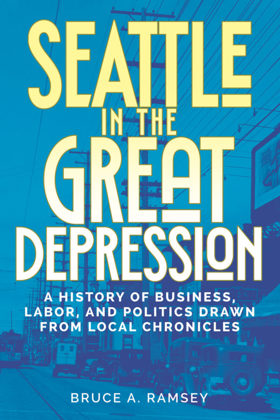
Capturing stories from Seattle newspapers and other sources, this narrative history traces a turbulent decade that scarred a generation and defined years of policy and culture—from the city’s real estate depression, savings and loan failures, and waterfront Hooverville, to its political fights over unemployment assistance, intense business rivalries, union growth, and more.
260 pages, illustrations, notes, bibliography
CIRC [ 0 ]
Ten years in Oregon by Daniel Lee, Joseph Frost
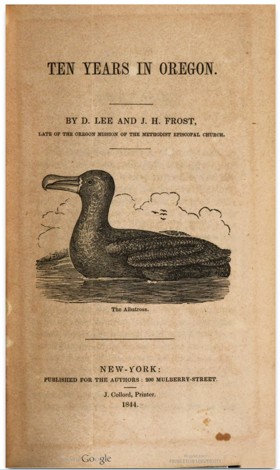
Containing also a brief history of the missions and settlement of the country, origin of the provisional government, number and customs of the Indians, incidents witnessed while traversing and residing in the territory, description of the soil, production and climate of the country. This work details the travels and adventures of Doctor E. White and his wife to the Oregon Territory and the incidents witnessed during their residence, with a brief history of the missions and settlement of the country, origin of the provisional government, number and customs of the Indians, and a description of the soil, production and climate. Excerpts from John Charles Frémont's Narrative Sabin are included.
399 pages : 1 portrait ; 20 cm
ONLINE CIRC [ 1 ]
Growing up with Lake Forest Park the early decades in "North Seattle" : Vol II by Barbara L. Drake Bender
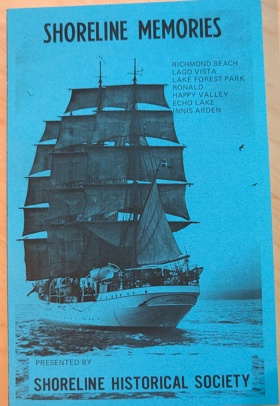
Shoreline memories Volume 2 by Shoreline Historical Society
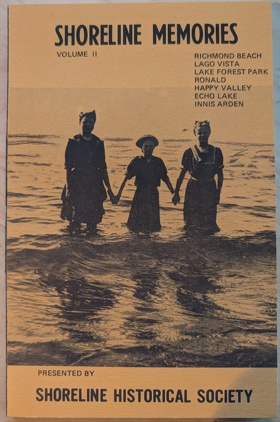
Shoreline memories Volume 1 by Shoreline Historical Society
The Lake Washington story a pictorial history by Lucile Saunders McDonald
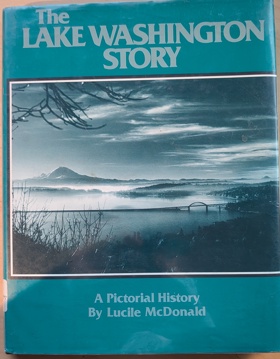
A physical and social history of Lake Washington, the 20 mile long body of water that forms the greater part of the eastern boundary of Seattle
160 pages : illustrations ; 28 cm
CIRC [ 1 ]
Having begun his naval career as a midshipman in Captain Cook's second and third voyages (1772-1778), in 1791 George Vancouver was commissioned by the Admiralty to travel to the Pacific north-west coast of Canada to negotiate a solution to the escalating trade conflict between Britain and Spain in the Nootka Sound and to further and explore the coastline of the region. In April 1791, Vancouver, commanding the sloop HMS Discovery, set sail from Britain under the escort of the gunship HMS Chatham. Following brief stops in Tenerife, Cape Town and Australia, the ships arrived in the Pacific Northwest in June 1792 and Vancouver began to survey the rugged coast of the Straits of Georgia. Landing at the site of the present-day city of Vancouver on 13 June, the expedition encountered a welcoming Coast Salish community, who fed and accompanied them while they spent the night ashore. The voyage later circumnavigated and surveyed the island now known as Vancouver Island before returning to Britain in 1795. The extensive account of the voyage was edited by Vancouver's brother, John, and published in three volumes in 1798. Though not as gripping as earlier travel accounts, tending to focus on surveys and nautical charts, Vancouver's surveys were nevertheless important in establishing British dominance in the region into the nineteenth century.
3 volumes : illustrations (engravings), map (engraving) ; 32 cm (4to) + 1 atlas ([16] leaves of plates (6 folded) : illustrations, maps ; 46 cm)
ONLINE CIRC [ 3 ]
Idaho, its meaning, origin and application by John E. Rees
Published in 1917 by pioneer historian and Indian trader John E. Rees, Idaho: Its Meaning, Origin and Application is a focused etymological monograph attempting to definitively trace the linguistic roots of the state's name. The text argues that the word originates from the Shoshone exclamation "Ee-dah-how," romantically translated as "the sun comes down the mountain," drawing heavily upon Rees's personal interactions with local tribes and early frontier lore. By compiling linguistic fragments, regional myths, and legislative records, the booklet served to establish a poetic Indigenous pedigree for the newly minted state, one that was enthusiastically embraced by local civic boosters despite subsequent linguistic disputes. A keen insight drawn from the work is how the pioneer-era appropriation of Native language functioned as a form of cultural trophy-hunting; by cementing a highly romanticized, settler-translated Indigenous phrase as the official state identity, early historians actively co-opted Native heritage to give the colonial government an aura of natural, ancient legitimacy while simultaneously overseeing the systemic marginalization of the very people whose language they claimed to honor.
Vol. 18, No. 2 (Jun., 1917), pp. 83-92 (10 pages)
ONLINE CIRC [ 1 ]
Oregon—Its Meaning, Origin and Application by John E. Rees
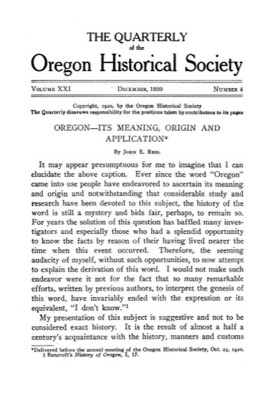
Published in 1920 by pioneer historian John E. Rees, Oregon—Its Meaning, Origin and Application is a brief etymological tract dedicated to deciphering the heavily contested linguistic roots of the state's name. Expanding upon the speculative methodologies he applied to neighboring Idaho, Rees argues that "Oregon" derives from specific Native American phonetic roots, attempting to definitively anchor the title in regional Indigenous dialects rather than European cartographic errors. By weaving together regional folklore, early exploration accounts, and localized vocabulary, the monograph attempts to construct a seamless narrative of authentic native pedigree for the broader Oregon Territory. A keen insight drawn from the work is how early regional scholars felt compelled to anchor new geopolitical entities to an imagined, romanticized Indigenous past; by fiercely claiming a "pure" Native origin for the state's name, historians like Rees actively commodified Indigenous heritage to lend an air of ancient, natural legitimacy to a recently manufactured colonial government.
1 volume (unpaged) ; 24 cm
ONLINE CIRC [ 1 ]
Idaho Chronology, Nomenclature, Bibliography by John E. Rees, B. Sc.
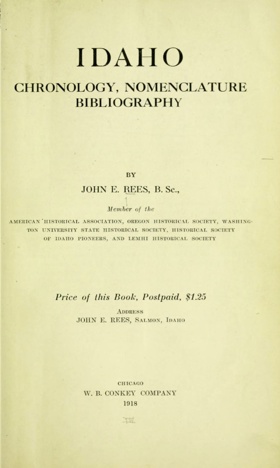
The book provides a comprehensive overview of the history and development of the state of Idaho, including a detailed chronology of important events, a thorough exploration of the state's place names and their origins, and an extensive bibliography of literature related to Idaho's history. The book is a valuable resource for anyone interested in the history of Idaho, and provides a fascinating glimpse into the state's past.
125 pages ; 22 cm
ONLINE CIRC [ 1 ]